1492
.jpg/320px-Landing_of_Columbus_(2).jpg)
Columbus sailed, blah blah blah. Yes, 1492 was a crucial year for the Western Hemisphere. Its societies and ecosystems were massively transformed in the decades and centuries that followed. But the Old World was going through changes of its own. In Spain, Ferdinand and Isabella finished up the Reconquista, the series of military campaigns that took over Muslim-ruled areas over the course of 700 years. Along with neighboring Portugal, Spain was becoming one of the first modern nation-states. Having centralized control of such large areas provided the economic resources for "exploration" and colonization, including Bartolomeu Dias's 1488 voyage around the Cape of Good Hope. From the Philippines to India to Africa to the Americas, vast areas of the world would be colonized and economically exploited by the Spanish and the Portuguese for centuries to come. Meanwhile, other European states such as England and France were set to become nation-states themselves and throw themselves into the colonial game. As ongoing separatist movements in places like Scotland and Catalonia show, though, this process of economic, political, and linguistic centralization was never definitively finished in the earliest nation-states.
1517
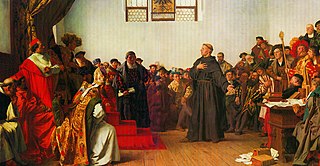
It's easy for us late moderns to think of the Protestant Reformation, begun by Martin Luther in 1517, as an isolated religious event. To some degree it was merely an especially intense part of processes that were already occurring. For example, religious reformers had emerged throughout Europe throughout the previous two centuries. And Germanic tribes in Northern Europe had never really been part of the same Europe as the Italians who dominated the Latin church. Still, with the emergence of Lutheran and Reformed kingdoms and duchies, the English monarchy with its own church, and radically sectarian groups like the Anabaptists, the Reformation led toward the modern situation in which the state holds far more power than any church. Moreover, like their sometime hero Augustine of Hippo, the leading Protestant reformers emphasized that individuals had a relatively direct relationship to God. Centuries later, Americans would be "bowling alone," partly as a result of this Protestant emphasis. And capitalism? It just happened that extremely industrious places like Holland, Switzerland, and New England had been influenced by Jean Calvin's Reformed faith--or at least that's what sociologist Max Weber claimed.
1648
.jpg/314px-The_Ratification_of_the_Treaty_of_Munster,_Gerard_Ter_Borch_(1648).jpg)
If the Reformation began in 1517, it ended in 1648. So did the 30 Years' War, which obviously began in 1618. Where the Reformation had shattered Europe's political stability, the 1648 Peace of Westphalia rebuilt it, creating sovereign states with clear borders across Western and Central Europe. The resulting system of international relations provided for the growth of European colonies in the rest of the world, since there was less chaos to worry about on their borders. This relative calm, despite continued wars between states, lasted until the Napoleonic Wars, and the Westphalian System wasn't totally undone until World War I.
1789

The French Revolution may not have achieved its aims right away (liberty, equality, fraternity), but it did make those aims the central issue of debate in modern politics. This uprising was a crucial testing ground for Enlightenment ideas, and some of the earliest conservative thinkers (such as Edmund Burke and Joseph de Maistre) formed their views in opposition to the Revolution. Even today, the tactics (such as barricades and revolutionary councils) and slogans of the French Revolution inspire resistance to governments almost whenever it reaches the boiling point. In the wake of the revolution, the Napoleonic Wars reshaped the map and the legal codes of Europe.
1848

More revolutions? Yes, that's what happened in almost every European country during 1848. A relatively unknown German exile in London, the journalist Karl Marx, and his friend Friedrich Engels hastily produced a manifesto for the international Communist Party, the spectre of which, they claimed, was haunting Europe. That was an utter lie, since there wasn't such a thing as the Communist Party and Engels didn't even see the manifesto before it was published, but it also turned out to be a self-fulfilling prophecy. Even more significantly, nationalism emerged as the defining force of the 19th century, with revolutionaries demanding that scattered duchies and city-states unite to form such linguistically-united nations as Germany and Italy.
1914

The deadly battles of the Great War (around 10 million were killed) shattered the mood of European civilization in the way that melodramatic Americans imagined that 9/11 had done for their own civilization. Initially, the fires of nationalism had burned bright in 1914, with young men being joyously sent off to war as if something wonderful was happening. By the end of the war, Great Britain had lost a generation of men, a good deal of France was physically devastated, Germany was a political and economic wreck, Italy had lost multitudes of soldiers for a few villages in territory, and the Austro-Hungarian Empire, the Ottoman Empire, and the Russian Empire--three of Europe's major powers before the war--had ceased to exist. British historian Eric Hobsbawm famously marked 1789 as the beginning of the "Long 19th Century," an era that exceeded the normal bounds of a century. 1914 was the end of this era of European optimism, colonial expansion, and nationalist utopianism.
1917
.jpg)
It was 1917 that really scared the world's powers-that-be, though. From then until roughly 1922, the Bolsheviks, a small communist party that rapidly eliminated its rivals, consolidated power over most of the former Russian Empire. After a February 1917 revolution overthrew the Tsar, who had trouble feeding his own troops as they were slaughtered by German and Austro-Hungarian armies, Vladimir Lenin and the Bolsheviks took advantage of the chaos to launch their own October Revolution. Their "dictatorship of the proletariat" so frightened the capitalist nations of the day that the US, Canada, the UK, France, Japan, Italy, and several other nations militarily intervened on the side of the White armies who opposed the Bolshevik Red Army. They were unsuccessful, and the Bolsheviks eliminated both the remnants of Tsarism and rival groups such as the Mensheviks, the Socialist Revolutionaries, and anarchists. The success of Lenin and his party, which had established local workers' councils called "soviets" across the nation, shaped resistance to capitalism over the course of the next century. From time to time, as in 1918 in Bavaria (where an actual socialist republic was formed) and after World War II in Italy and France, the spectre of communism did haunt Europe as a result of the October Revolution.
1945

This was a year that stood between an old world and a new one. One could argue that the modern world didn't really begin until 1945. Only after this year did agriculture start to disappear as a major part of the labor force in Europe and North America, while consumer goods rose in importance. And 1945 was the beginning of the end of colonialism, particularly since the UK had economically exhausted itself during World War II. While the world's monetary policy was set for decades at the 1944 Bretton Woods Conference, the United Nations was emerging as the center of international diplomacy. After Churchill, Roosevelt, and Stalin divided up Europe at the Yalta Conference, the borders of the Cold War era were mostly established. And, we can't forget, the atomic bomb was used on two Japanese cities, inaugurating a new era marked by the devastating and horizon-expanding potential of previously-unthinkable scientific progress. This era was economically led by the US and its partners in Western Europe and Japan, with US post-war reconstruction aid shaping the world as we know it today, in which Japan and Germany are once again major economic powers.
1968
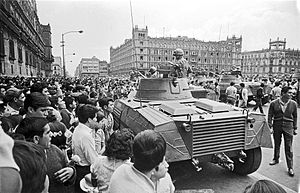
This was one of the biggest years of protest since 1848. Student protests threatened to bring down the governments of Mexico and France. Czechoslovakians resisted an invasion by Warsaw Pact armies. The US Civil Rights Movement grew more intense and violent as Black nationalism grew in prominence after Martin Luther King, Jr. was assassinated and little was done to eliminate housing discrimination in large northern cities. In many of these cities, major riots provoked the kinds of white and suburban fear to which Richard Nixon appealed. From the US to West Germany, student protesters opposed everything from hierarchical and supposedly oppressive university structures to US military involvement in Vietnam, Cambodia, Laos, etc. At the 1968 Democratic Party Convention in Chicago, antiwar riots permanently altered the US political psyche and the shape of the Democratic Party. Around the world, establishment liberalism and Western Marxism were challenged by the so-called New Left, which focused on racial, ethnic, and women's rights issues that became known as identity politics.
1973

In 1971, Richard Nixon had detached the value of the US dollar from the gold standard, which marked the end of the Bretton Woods monetary system that had governed the world's economies since 1945. Then, after the Yom Kippur War, several Arab oil-producing nations cut off oil supplies to NATO nations, in retaliation for US military aid to Israel during the war. These two events led to a world of rising oil prices, unstable currencies, and economic deregulation. After the inflation of the 1970s, political neoliberals advocated for deregulation of financial markets and free trade, which created the economic and political world of 2014, not to mention 2007-2008.
Conclusion
Do all of these pivotal years matter all that much today? Take the 1914 cataclysm that ended Eastern Europe's empires for instance. What we now as Ukraine was formed out of a western area that had been part of the Austro-Hungarian Empire and an eastern area that had been part of the Russian Empire before they collapsed during the war. Or take the Arab Spring and Occupy protests, among others, for instance. Where did they learn to barricade streets, formulate manifestos, and distribute pamphlets (or Tweets, as the case may be)? Without the events of 1789, such tactics wouldn't immediately enter the mind of any would-be revolutionary.
Of course, many other years were hugely important. Events such as the American Revolution, Constitution, and Civil War; the Partition of India; and the Chinese Cultural Revolution had a major influence on the world as we know it today. But hopefully the years listed above give a rough outline for understanding how we got this world, including some events that are largely forgotten today.
